Demonic possession
Exorcist FallsDemonic possession in the novel is an invasive condition in which a spirit occupies a human body and may seek to govern it, altering the host’s appearance, speech, and agency. Its clearest early instance is Casey Hartman’s possession by Malephar: the signs persuade Jason Crowder that the boy is no longer acting alone, yet the story insists that spiritual certainty must be weighed against the harm of misdiagnosis. The condition’s stakes widen when Malephar moves among hosts, making possession not simply an affliction to be ended but a threat whose apparent defeat may only begin another transfer.
Recognition and Diagnosis
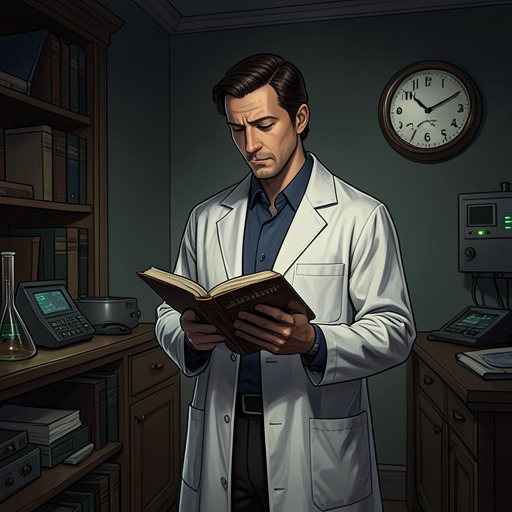
Jason Crowder initially tries to hold open ordinary explanations for Casey Hartman’s behavior. Before seeing the boy, he rehearses a cautious response modeled on Father Sutherland’s likely approach: a seizure or an undetected psychological condition might account for what has happened, and the potential causes must be investigated. That hesitation reflects a central problem of the novel’s treatment of possession: symptoms that invite a supernatural explanation do not, by themselves, justify one.
Father Sutherland’s experience gives that caution concrete weight. He recounts four exorcisms, two of which he believes were wrongly directed at people with other explanations for their behavior. One woman, who had an untreated personality disorder, deteriorated further after her condition was labeled possession and eventually died in an institution. A child who feigned possession in response to an intense desire for attention and her parents’ religious zealotry injured herself, later turned to drugs, and died of a heroin overdose at nineteen. For Father Sutherland, an exorcism undertaken without discernment can compound suffering rather than relieve it.
Casey’s examination supplies evidence that ultimately persuades Father Sutherland. During roughly twenty minutes of questions, holy water, rites, and crosses, Casey shifts between lewd mockery and enigmatic whispers. At Father Sutherland’s request, he speaks Latin, ancient Hebrew, and Aramaic, as well as languages the observers cannot identify. Even the priest is baffled by what he hears. When Casey’s father asks whether the priest is sure, Father Sutherland confirms that he is. His judgment follows an examination; it is not presented as an automatic conclusion drawn from distress alone.
The Possessed Host
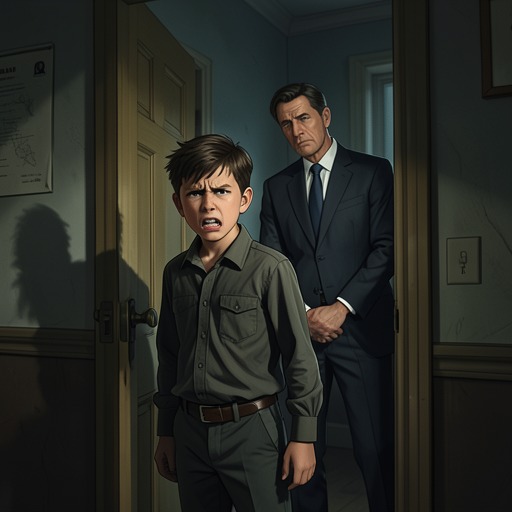
Jason Crowder recognizes Casey’s possession before Father Sutherland formally confirms it. Casey’s formerly innocent face has become a sign of estrangement: his eyebrows arch hideously, his forehead furrows, his eyes turn scarlet, and his skin appears pallid. Most disturbing to Crowder is the mocking leer that seems to erase the boy’s humanity. The description conveys how possession makes an intimate, familiar face appear occupied by something hostile, while Crowder’s certainty remains his perception at that moment rather than the priest’s completed assessment.
The spirit’s presence is also expressed through capacities that exceed ordinary speech and perception. Father Sutherland describes the presence attacking Casey as exceptionally malevolent, speaking languages not uttered for centuries or perhaps millennia and displaying a remarkable ability to penetrate other people’s minds. Crowder frames the question of host selection as significant: in cases considered authentic, he says, the inhabiting spirit seldom chooses at random, and there is ordinarily some logic to its choice. The novel establishes the principle without fully explaining why Casey is selected.
Possession also threatens the host’s bodily autonomy. In the course of the crisis, Casey clamps a hand around Father Sutherland’s wrist; Crowder later recalls invisible pressure constricting his own airway as he approaches Casey’s bed. These moments place the conflict in physical contact and bodily vulnerability, not only in competing beliefs about what is happening. The danger is serious enough that the family avoids doctors and paramedics because sedation might prove disastrous, a decision that shows how a spiritual diagnosis can shape immediate medical choices even as it increases the risk of leaving conventional care aside.
Exorcism and Uncertain Recovery
Jason Crowder’s decision to intervene turns recognition into a struggle over Casey’s survival. He recalls the boy as a polite, cheerful child who liked the Beatles and LeBron James, and concludes that whether Casey had any connection to the killings or not, he did not deserve to die or to be usurped and tortured by a presence beyond human understanding. Crowder opens the Bible Father Sutherland has given him and rebukes the spirit, demanding that it leave the child’s body. Casey then ceases to struggle.
The apparent deliverance offers relief but not unqualified closure. Two nights later, Crowder describes the exorcism as a triumph while immediately questioning whether he and Father Sutherland truly prevailed. Liz Hartman later asks whether the demon will return and whether Casey remains in danger. Crowder assures her that the effort succeeded and claims to have healed Casey, but the novel preserves a gap between this assurance and the family’s fear. The concern is not abstract: in the space of a week, Liz has seen her son possessed, the spirit attack her and her daughter, two men die in her house, and her family fracture over revelations about her husband.
The novel also gives possession an uncertain aftermath. Father Sutherland explains that the spirit may not die when a host dies. Although some experts consider its death possible, most believe that the offending presence enters a dormant state and may remain there for many years or even centuries. This account complicates the apparent finality of either exorcism or a host’s death: the spirit may be absent from active control without being destroyed.
Transfer, Resistance, and Recurrence
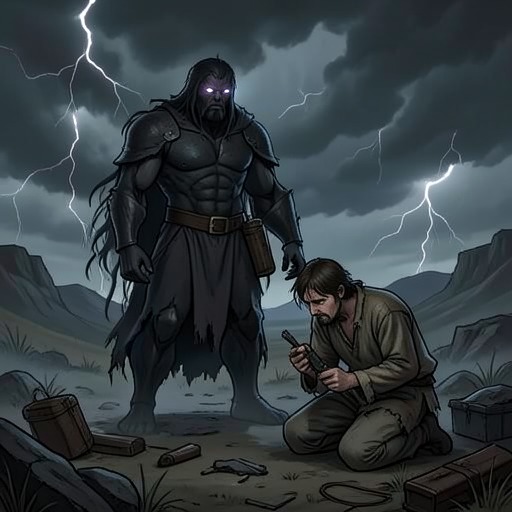
The crisis involving Casey becomes the first stage in a chain of possession. Jason Crowder later understands that Malephar entered him two nights earlier and describes it as having burrowed into his body like a pestilence. He believes he has resisted its attempts to govern him as it governed Casey and, in Crowder’s account, many other human hosts throughout its history. His plan to meet Danny Hartman in darkness makes the transfer’s changed circumstances explicit: Danny, as a human being, relies on ordinary senses and may be disadvantaged, whereas the demon inhabiting Crowder would not share those limitations. Crowder’s resistance is therefore not proof that he is free of the spirit; Malephar remains present even when it has not fully mastered him.
Later explanations connect Casey’s exorcism to Father Sutherland’s death and Crowder’s own possession. Danny Hartman reconstructs a sequence in which the demon leaves Casey, enters Father Sutherland, and then enters the nearest available body after the priest leaps through a window. Danny believes that body was Crowder’s, who tried to conceal what had happened until events came to a head in the tunnels. This account makes the exorcism’s success partial in a crucial sense: Malephar can be driven from one host without being eliminated.
The chain continues beyond Crowder. Malephar says that it entered Father Patterson while Crowder was being helped out of the reservoir, and that contact with Crowder at the hospital allowed it to reveal Crowder’s secrets to the priest. It calls Father Patterson a perfect host and says that this revelation shattered his faith because he learned Crowder had murdered Father Sutherland. Separately, Crowder recognizes that a demon might take physical form without a host—an eventuality he had never considered in his reading, conversations with Father Sutherland, or nightmares. Together, these developments expand possession beyond a simple model of one demon confined to one body: host transfer, resistance, and a possible hostless form all unsettle the supposed boundaries of the condition.
Medical, Moral, and Narrative Stakes
The novel repeatedly sets religious discernment beside scientific skepticism. Jason Crowder observes that information about the psychological aftermath of possession is scarce because science and faith have too often opposed one another. He also warns that believers eager to validate their faith may jump to illogical conclusions, while many apparent cases calling for spiritual intervention may instead involve schizophrenia. This debate does not erase the story’s supernatural events; it makes the naming of a condition consequential, with both false certainty and refusal to recognize the supernatural carrying potential costs.
For Casey, possession raises a further question that exorcism cannot settle: what remains in a person after the invading presence is gone? Crowder wonders whether Casey’s later atrocity reflects emotions permanently left by Malephar or whether Casey had harbored destructive desires before the possession and found an opportunity to release them after learning that his uncle was the serial killer terrorizing the city. The narrative leaves both possibilities open. Possession may explain a breach in agency, but it does not neatly resolve questions of lasting injury, responsibility, or the host’s earlier self.
That unresolved tension defines the condition’s narrative role. Casey’s possession teaches Crowder to distinguish a vulnerable child from the presence controlling him, while its apparent exorcism establishes neither permanent safety nor the demon’s destruction. Each new host exposes the limits of a victory measured only by removing the spirit from one body. The return of Malephar makes possession a recurring contest over agency, diagnosis, and responsibility—and leaves recovery shadowed by the possibility that the spirit, or the damage associated with it, has not truly departed.